"They knew the trees were protected... they could legally do with this land as-is."
Carroll Ann Bennett of the Tampa Tree Advocacy Group said that about a developer's plan to clear two oaks from the old Kojak's House of Ribs site on Gandy Boulevard. The city's Variance Review Board had already denied the removal request that fall, and the developer was back before city council appealing the decision. The dispute ran for months before it resolved. Nobody in that fight was shopping for a house. But the same rule that stalled a townhome project on Gandy Boulevard sits on every lot in Parkland Estates and New Suburb Beautiful, two South Tampa neighborhoods of oversized early-to-mid twentieth century lots where the canopy overhead is doing as much selling as the listing photos.
That is the piece worth knowing before you write an offer on a teardown candidate here. The oversized lot and the mature oak canopy that make these streets desirable are the same features that can add months to a rebuild timeline, because Tampa treats a large enough oak as a matter for public hearing, not routine permitting.
What Counts as a Grand Tree in Tampa
Tampa's Chapter 27 tree code sets a specific line. Any protected tree measuring 32 inches or more in diameter at breast height qualifies as a Grand Tree, and removing one requires more than a standard permit. According to the city's own construction services page, a Grand Tree "may require a Variance Review Board, City Council, or other public process decision to allow the removal" if it is not already in hazardous condition.
Thirty-two inches is a meaningful threshold. Orlando sets its Grand Tree line at 30 inches. Jacksonville sets it at 24. Tampa's number is the highest among the major cities that track this, which means the city built its strictest tier around the trees that take the longest to grow back. A live oak commonly reaches 32 inches DBH somewhere in its second or third century of growth, or considerably sooner on a well-watered urban lot. Either way, it is not a young tree. It is the kind of tree a 1920s-platted neighborhood accumulates simply by being a century old.
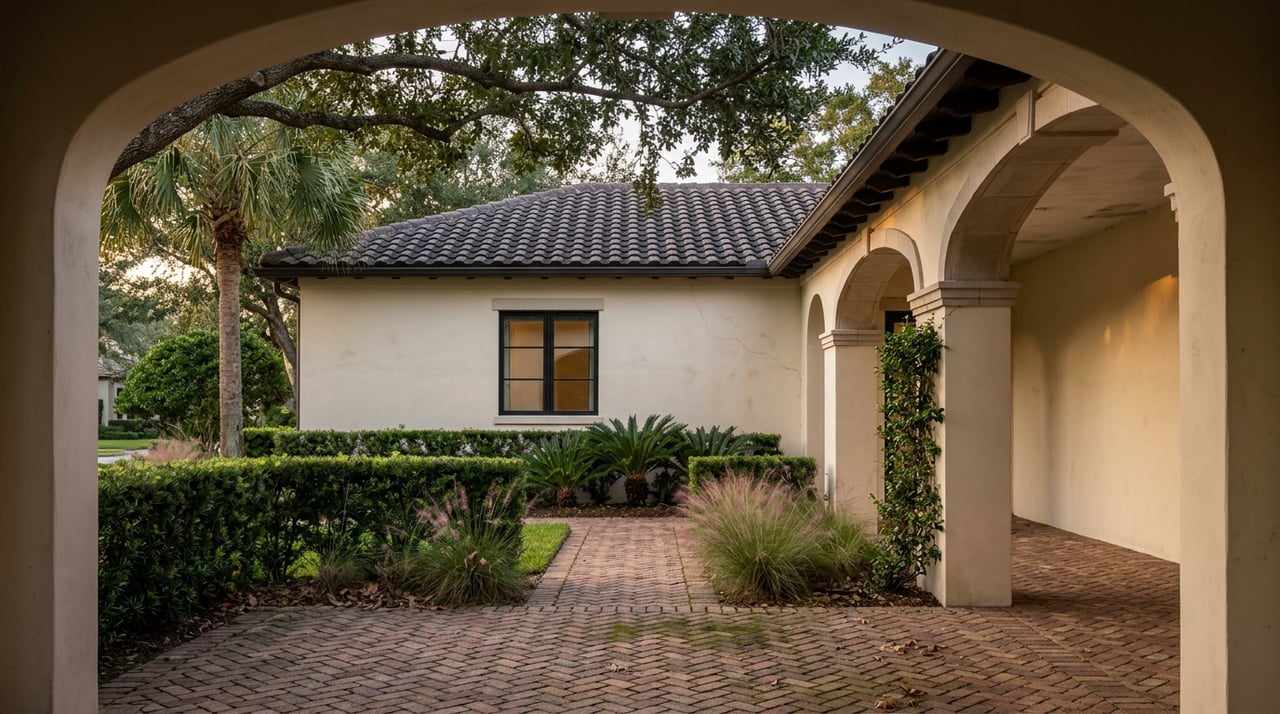
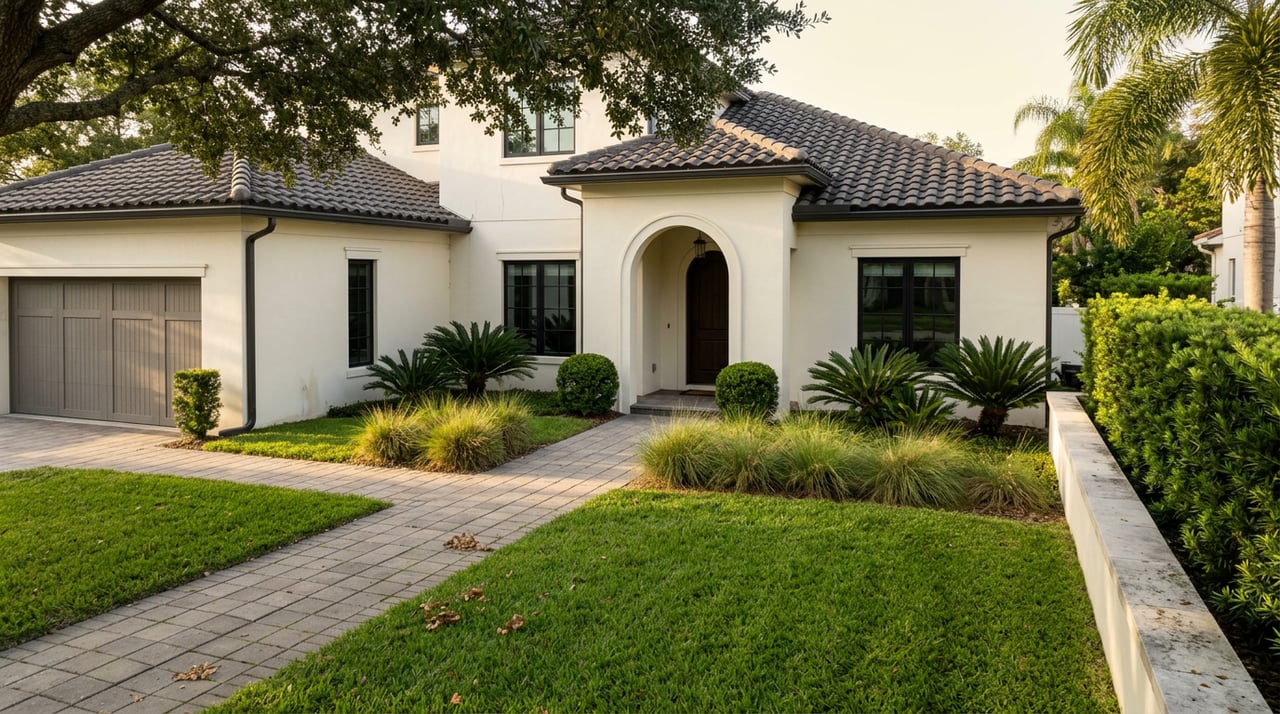
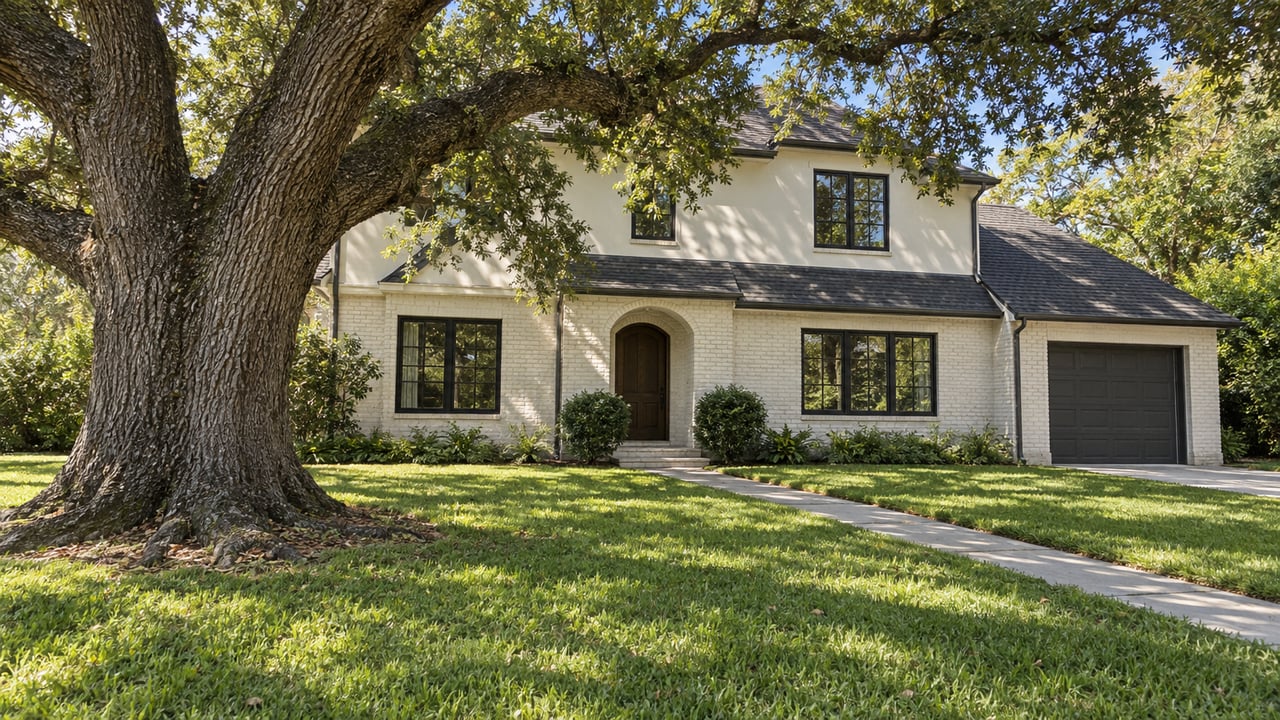
That is what makes Parkland Estates and New Suburb Beautiful a different case than a newer subdivision. Parkland Estates was platted in the 1920s specifically with parks and canopy worked into the layout, and New Suburb Beautiful shares the same pattern of oversized lots a few years later. The oaks that shade these streets today have had the better part of a century to get large. A lot that reads in a listing as "mature oak canopy" is, in permitting terms, a lot with a real chance of carrying one or more Grand Trees on it.
Why This Lands Differently Here Than in a Newer Subdivision
Every building permit application in Tampa has to include a tree survey that locates and identifies every protected and Grand Tree on the parcel, plus any within 20 feet of the property line. That requirement exists everywhere in the city. But its practical weight depends entirely on what is actually standing on the lot, and in Parkland Estates that answer is often "more than one large oak."
Over the 12 months ending in early 2026, Parkland Estates sale prices have run in the $2.3 million to $2.5 million range, on a neighborhood that saw only 14 to 15 closings in that window. That is thin trading for a market this expensive, and it means most buyers here are not comparison shopping against dozens of recent sales. They are underwriting a specific lot, often with an eye toward a rebuild, and weighing that against rising insurance costs on older bungalows that can run $4,000 to $8,000 a year. New construction earns better wind mitigation and flood elevation terms, which is exactly why so many buyers in this price range are looking at teardown potential in the first place.
The buyer chasing that insurance advantage is the same buyer most likely to run into the Grand Tree rule, because the incentive to clear the lot and build new is strongest precisely where the century-old canopy is thickest.
How the Threshold Compares Across Tampa Bay Cities
| City | Grand Tree Threshold | Additional Requirement |
|---|---|---|
| Tampa | 32 inches DBH | Public notice; possible Variance Review Board or City Council review |
| Orlando | 30 inches DBH | City review |
| Jacksonville | 24 inches DBH | Sits above a 12-inch specimen tier |
| Safety Harbor | 26 inches DBH minimum | Plus a condition rating of at least 3.5 and species-specific point totals |
Tampa's number sits at the strict end of that range, and Parkland Estates and New Suburb Beautiful are exactly the kind of neighborhood where a rebuild plan is most likely to meet it.
What the Permit Path Actually Looks Like
For a straightforward addition or accessory structure, tree removal gets folded into the building permit rather than handled separately. The city evaluates it against the site plan you submit. For a full teardown and rebuild, the sequence generally runs like this:
- Commission a tree survey that documents every protected and Grand Tree on the lot and within 20 feet of its boundary, including species and DBH.
- Submit that survey with your building permit application, along with a site plan showing where the new structure sits relative to those trees.
- If a Grand Tree stands where the new footprint needs to go, expect the city to ask whether the design can be reconfigured to save it before it will consider removal.
- If removal is approved, plan for mitigation. That typically means replanting on site at a set ratio, or a contribution to the city's tree fund if there is no room to replant.
- If a Grand Tree removal is contested, budget real time for a Variance Review Board hearing and, in some cases, a City Council appeal.
None of this happens on a weekend. The Kojak's case took months to work through, and the developer, Michael Mincberg, made a point during the appeal of saying "we're not some big out of towners who are not sensitive to what's going on here." The city sided against the removal anyway. That case did not involve a home buyer, but it shows how a genuinely motivated development team, working within the rules, can still find the process slower and less certain than a typical residential permit.
What Getting This Wrong Actually Costs
The city has also shown what happens when someone skips the process entirely. In 2019, a South Tampa mobile home park owner had several grand oaks removed on Gandy Boulevard without city permits, relying on a state law that allows removal without a permit when a certified arborist documents that a tree poses a danger. The city disagreed with how that exemption was being applied and issued a combined fine of $840,000 against the property owner and the tree service that did the work. Then-Mayor Jane Castor said at the time that the fine was meant to make clear cutting first and arguing later "can't be looked upon as, we'll just cut down the trees and consider that the cost of doing business."
That case predates the current market and involved a different kind of property, but the fine itself is still the clearest data point on how seriously Tampa enforces this code. A buyer weighing whether to test the boundaries of a tree survey on a Parkland Estates rebuild is weighing that history too.
What This Means If You're Evaluating a Teardown Candidate
Before writing an offer on a lot you are considering for a full rebuild, ask for or commission an arborist's DBH count on every oak large enough to matter. A lot with two or three trees clustered near the buildable envelope is a different underwriting problem than a lot where the canopy sits along the property lines and out of the way. The difference shows up not in the sale price but in how long it takes to get from closing to a building permit in hand, and in whether your design has to work around a tree the city will not let you remove.
Build the permit timeline into your renovation schedule with the same seriousness you would give a flood elevation certificate or an insurance quote. A design that respects the existing canopy from the start moves through the city's process far faster than one that has to be redrawn after a Grand Tree review comes back unfavorable.
A Few Questions Worth Asking Directly
Does the Grand Tree rule apply to pruning, or only removal? Both, in a sense. Tampa requires a permit to remove any protected tree 5 inches DBH or greater, and a separate pruning permit for trees 24 inches DBH or greater. Grand Trees at 32 inches carry the added layer of public review specifically for removal.
Does a dead or hazardous tree still require this process? Florida law allows removal without a city permit when a licensed arborist documents in writing that a specific tree poses a danger to people or property. The documentation has to be solid. The 2019 Gandy Boulevard case shows what happens when the city disputes that a hazard determination was made in good faith.
Does this apply to trees on a neighboring property? The tree survey requirement covers any protected or Grand Tree within 20 feet of your property boundary, not just trees standing on your own lot, so a neighbor's oak can factor into your site plan review even if you never touch it.
If you are looking at a lot in Parkland Estates or New Suburb Beautiful and trying to figure out what a specific canopy means for your renovation or rebuild timeline, Andrea Webb can walk the property with you before you write an offer, not after.